TitanPro Cutting TitanPro Cutting

Top 10 Tips for Lubricating Linear Guides on Bridge Cutters?

Time:2026-05-22 Author:Aria
0%

Lubrication plays a crucial role in the performance and longevity of linear guides on bridge cutting machines. Properly maintaining these guides ensures smooth operation and reduces wear and tear. Understanding how to lubricate linear guides on a bridge cutting machine is essential for operators and maintenance teams alike.

In this guide, we present the top 10 tips for effective lubrication. These tips stem from industry experience and expertise. They emphasize common pitfalls and practical solutions. For instance, choosing the right lubricant is paramount. Many overlook this key aspect. The wrong type can lead to failures and increased downtime.

Moreover, ensuring consistent lubrication intervals is vital. Skipping this step can create gaps in performance. Operators should also pay attention to signs of wear. If things seem off, don't ignore them. Regular audits of lubrication practices can reveal unexpected issues. This awareness can foster a more efficient working environment. Proper knowledge and application can distinctly enhance the lifespan of bridge cutting machines.
Top 10 Tips for Lubricating Linear Guides on Bridge Cutters?

Understanding Linear Guides and Their Role in Bridge Cutters

Linear guides play a crucial role in bridge cutters, ensuring precision and stability during operation. They facilitate smooth motion across significant spans, which is essential for accurate cuts. According to industry reports, improper lubrication can reduce the lifespan of these guides by up to 50%. This emphasizes the importance of maintaining optimal lubrication levels to prevent wear and tear.


Bridge cutters often face demanding conditions, including heavy loads and high speeds. Over time, contamination can occur, leading to performance issues. It is suggested that users implement a routine inspection schedule. Regular assessments can identify lubricant degradation and contamination. This can prevent costly downtime and repairs. Reports indicate that proactive maintenance could lead to a 30% increase in operational efficiency.


While many understand the basics of lubrication, several factors need consideration. The choice of lubricant, the application method, and the environmental conditions all influence performance. Some users might overlook these variables, leading to subpar results. Therefore, it is critical to refine the lubrication process continually. Adjustments based on specific operating conditions can enhance the reliability of linear guides significantly.

Identifying the Right Lubricant for Linear Guides

Choosing the right lubricant for linear guides on bridge cutters is crucial for optimal performance. Various factors influence lubricant selection. Consider the operating environment, load capacity, and expected speed. Each lubricant has unique properties. It's essential to match these properties with your machine's requirements.

Tips for selecting a lubricant include checking viscosity ratings. Low viscosity fluids are suitable for high-speed applications, while thicker oils work better under heavy loads. Be mindful of temperature ranges as well. Some lubricants break down at high temperatures, losing effectiveness. Regularly assess the lubricant's condition. Dirty or contaminated lubricants can lead to wear and tear.

Another important point is compatibility with existing materials. Mixing different lubricants can create unwanted reactions. Always consult technical resources for guidance. Monitoring performance post-lubrication is vital. If you notice increased noise or vibration, it could signal an issue. Test your system after each lubrication cycle to ensure everything runs smoothly.

Step-by-Step Guide to Cleaning Linear Guides Before Lubrication

Cleaning linear guides is essential for optimal performance. Dust and debris accumulate over time, affecting smooth operation. Start by disconnecting power to the bridge cutter. Safety is paramount.

Next, use a soft brush to remove loose dirt. Pay attention to corners and crevices where dirt can hide. Sometimes, compressed air can help clear stubborn debris. Wipe the guides with a clean cloth to eliminate leftover particles.

For deeper cleaning, use a suitable solvent or cleaner. Apply it to a cloth, not directly on the machinery. Carefully wipe the linear guides, ensuring no cleaner residue remains. After cleaning, inspect the guides for wear or damage. This step is often overlooked, yet crucial for long-term performance. Regular cleaning promotes efficiency. It extends the lifespan of your equipment, saving costs in the long run.

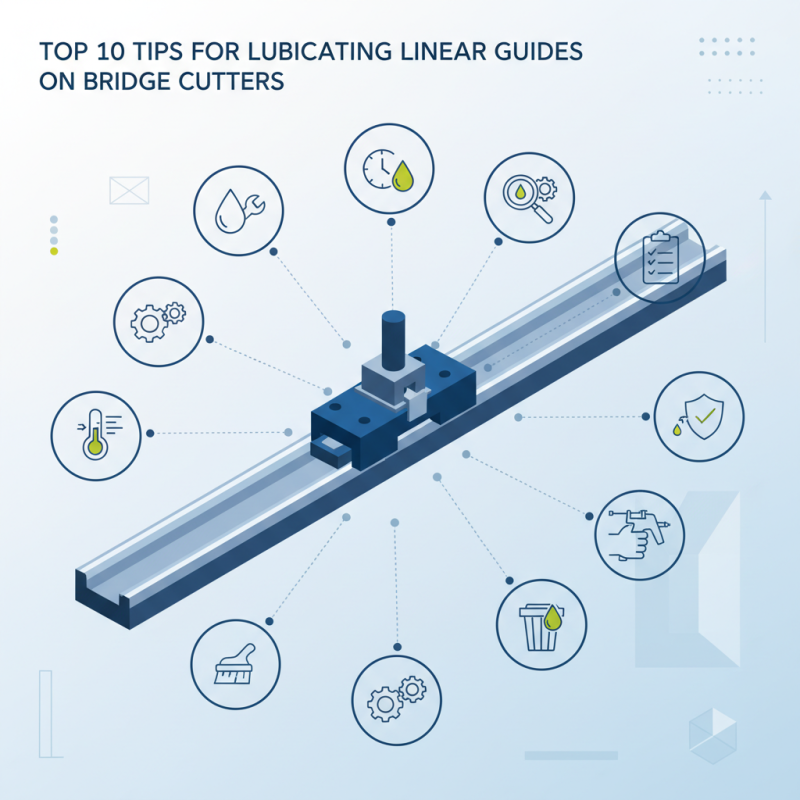
Top 10 Tips for Lubricating Linear Guides on Bridge Cutters

Tip Number Tip Description Frequency Recommended Lubricant Notes
1 Clean the linear guides thoroughly before applying lubricant. Every 100 hours of operation High-quality synthetic grease Use a lint-free cloth for cleaning.
2 Check for any signs of wear and tear on the guides. Every month N/A Replace if necessary.
3 Use the correct amount of lubricant—neither too much nor too little. Before each shift Medium viscosity oil Follow manufacturer recommendations.
4 Ensure a clean environment during lubrication. Always N/A Avoid dust and debris.
5 Use a lubricant applicator for precision. Before each lubrication N/A Helps control the amount applied.
6 Lubricate at the appropriate temperature. Seasonally Temperature-specific grease Follow temperature guidelines.
7 Monitor performance after lubrication. After every lubrication N/A Listen for unusual sounds.
8 Document lubrication tasks in maintenance logs. Ongoing N/A Facilitates troubleshooting.
9 Keep lubrication supplies organized and accessible. Always N/A Reduces downtime.
10 Consult the equipment manual for specific lubrication tasks. As needed N/A Ensure compliance with standards.

Best Practices for Applying Lubricant Effectively

Lubricating linear guides on bridge cutters requires precision and care. A well-lubricated guide can enhance performance and extend equipment life. Start with proper selection of lubricant. The viscosity must match the operational speed. Too thick or thin can lead to ineffective lubrication. Clean surfaces thoroughly before application. Any residue or dirt can hinder the effectiveness of the lubricant.

When applying lubricant, ensure an even distribution. Overapplying can cause excess buildup, attracting debris. Utilize a clean applicator for precision. Regular maintenance checks are crucial. Observing wear patterns can inform about lubrication effectiveness. Missed maintenance could result in guide failures or unexpected downtimes. Adjust your lubrication intervals based on usage frequency; don’t follow a fixed schedule blindly. Experience shows that subjective assessments often lead to inconsistencies.

Test different lubrication methods to find what works best. Observe how the guide operates post-lubrication. Reflect on your technique; there is always room for improvement. Regularly review best practices. Seeking feedback from peers can provide new insights. Each bridge cutter has its quirks, and recognizing these can fine-tune your lubrication process.

Maintaining a Regular Lubrication Schedule for Optimal Performance

Regular lubrication of linear guides on bridge cutters is crucial for their efficiency. A well-planned lubrication schedule can prevent wear and prolong the lifespan of these components. Check the manufacturer's recommendations for lubrication intervals. Using the right type of lubricant helps to maintain smooth operation. Frequent inspections ensure that the lubrication is effective. Inadequate lubrication can lead to more significant problems down the road.


Developing a routine is beneficial. It can become second nature over time. Keep a log of maintenance activities to help track performance. Adjust the plan if issues arise. Sometimes, signs of wear may still appear despite regular maintenance. This reflects the importance of being vigilant and proactive. Regular care can seem tedious, but it saves time and resources in the long run.


Training staff on proper lubrication techniques is essential. Everyone should understand the importance of maintaining equipment. Shared knowledge fosters a culture of care that can enhance productivity. Regular feedback and discussions can highlight areas for improvement. Emphasizing the need for precise lubrication routines can lead to better outcomes. Adaptability and attention to detail are key elements in maintaining optimal performance.

FAQS

: What is the role of linear guides in bridge cutters?

: Linear guides ensure precision and stability during operation, allowing for smooth motion across significant spans.

How does lubrication impact the lifespan of linear guides?

Improper lubrication can reduce the lifespan of linear guides by up to 50%, highlighting the need for optimal lubrication.

Why is regular inspection important for linear guides?

Routine inspections can identify lubricant degradation and contamination, preventing costly downtime and repairs.

What factors should be considered when choosing a lubricant?

Consider operating environment, load capacity, expected speed, and viscosity ratings for selecting the right lubricant.

What happens if two different lubricants are mixed?

Mixing different lubricants can cause unwanted reactions, potentially damaging the machinery.

How can one effectively apply lubricant to linear guides?

Ensure clean surfaces, even distribution, and use the correct viscosity. Watch for excess buildup.

What might increased noise or vibration indicate post-lubrication?

Increased noise or vibration could signal potential issues with lubrication or equipment performance.

How often should lubrication intervals be adjusted?

Adjust lubrication intervals based on usage frequency, rather than strictly following a set schedule.

What should be done after applying lubricant?

Monitor the system's operation and performance. Reflect on your technique for potential improvements.

How can peer feedback help in the lubrication process?

Seeking feedback from peers can provide new insights and help refine your lubrication techniques for better results.

Conclusion

In the article "Top 10 Tips for Lubricating Linear Guides on Bridge Cutters," we explore the crucial role of linear guides in ensuring the smooth operation of bridge cutting machines. To effectively lubricate linear guides on a bridge cutting machine, it is essential to choose the right lubricant, which can significantly affect performance and longevity. The article provides a detailed step-by-step guide on cleaning the linear guides prior to lubrication, ensuring optimal adherence of the lubricant.

Best practices for applying the lubricant are highlighted, emphasizing techniques that promote even distribution and prevent over-application. Additionally, establishing a regular lubrication schedule is recommended to maintain peak performance and reduce wear over time. By following these tips, operators can enhance the efficiency and reliability of their bridge cutting machines while learning how to lubricate linear guides effectively.

Aria

Aria

Aria is a dedicated marketing professional with a deep passion for innovative strategies and a keen understanding of our company's product offerings. With a wealth of experience in the industry, Aria excels at crafting engaging content that highlights the unique features and benefits of our......