When deciding how to choose between 3 axis and 5 axis CNC machines, it's essential to understand the unique capabilities of each. Industry expert John Smith, renowned for his contributions to CNC technology, states, "Selecting the right CNC machine can be a game changer for your production line." This highlights the importance of making an informed decision.
3 axis CNC machines are generally easier to set up and operate. They are ideal for simple cutting tasks and are cost-effective for small to medium production runs. In contrast, 5 axis machines provide enhanced flexibility. They can perform intricate cuts from various angles, allowing for complex designs. However, they require more skill to operate and generally come at a higher cost.
Choosing between these machines often depends on your specific needs and budget. If precision and complexity are priorities, the 5 axis may be the better choice. But for straightforward projects, a 3 axis machine could suffice. Reflecting on your operational goals is crucial, as choosing the wrong machine can lead to inefficiencies and increased costs.
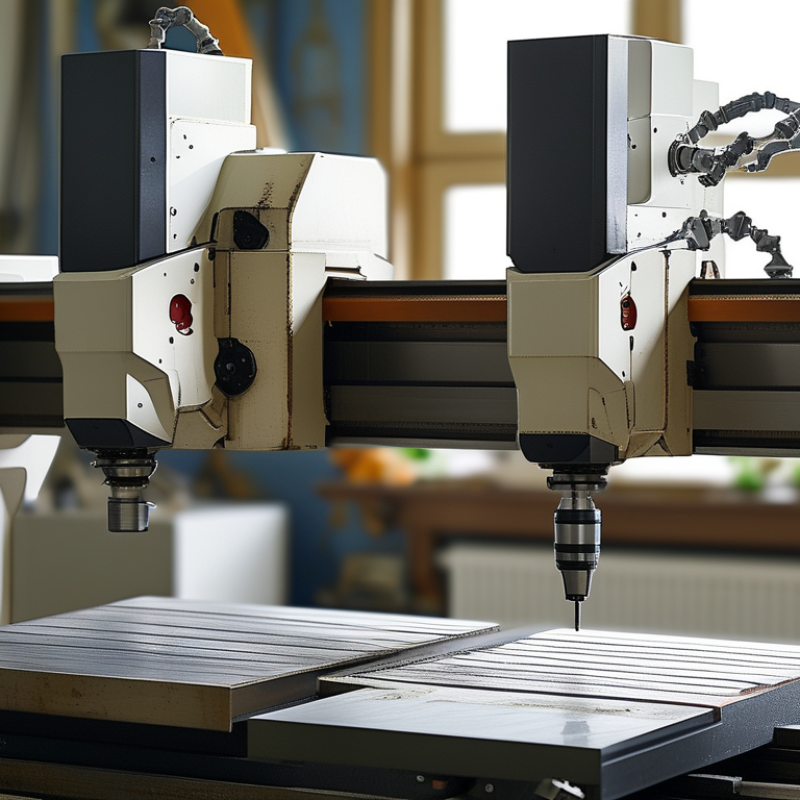
Understanding CNC Machining: Key Differences Between 3 Axis and 5 Axis
CNC machining is a critical process in manufacturing, offering precision and efficiency. Understanding the key differences between 3-axis and 5-axis CNC machines can guide your decision about which is best for your needs.
3-axis CNC machines move along three linear axes: X, Y, and Z. They are ideal for simple parts, like plates or brackets. The workflow is straightforward, and programming is easier. However, they can be limiting for complex geometries. For instance, machining a part with angled features or intricate details can be challenging. Users often need to reposition the part multiple times, which increases setup time and can affect accuracy.
In contrast, 5-axis CNC machines can rotate around two additional axes, providing increased flexibility. This capability allows for continuous machining without the need for repositioning. It’s perfect for complex shapes, such as those found in aerospace or medical applications. Yet, the learning curve is steeper. Programming requires advanced skills, and these machines can be costly. Businesses must weigh these factors against their specific needs and budget.
Precision and Complexity: When to Choose 3 Axis CNC Machinery
When considering CNC machinery, the choice between 3-axis and 5-axis systems greatly impacts precision and complexity. 3-axis CNC machines are often favored for their simplicity and effectiveness in producing flat parts. Industries like aerospace and automotive frequently use these machines for straightforward tasks, as 70% of all machining operations can be efficiently handled by 3-axis systems. They excel in cutting, drilling, and milling, especially when working with metals or plastics.
Precision is significant in machining, particularly when parts require tight tolerances. Reports indicate that 3-axis machines can achieve tolerances of ±0.01 mm, suitable for many standard applications. However, their limitations become apparent in high-complexity designs. For instance, 3-axis CNC might struggle with intricate geometries or multi-sided machining, potentially requiring additional setups. This is an area needing consideration; multiple setups can increase lead time and potential errors.
While 3-axis systems serve many needs, they are not a one-size-fits-all solution. Their simplicity leads to efficiency, yet they may not always meet the demands of advanced manufacturing. Engineers must reflect on their specific requirements and future goals when choosing between the two options. The trade-offs between cost, complexity, and capability are essential in making a well-informed decision.
Advantages of 5 Axis CNC: Enhancing Productivity and Material Utilization
5 Axis CNC machining offers clear advantages over 3 Axis systems, particularly in productivity and material utilization. In the aerospace industry, for example, companies can achieve reductions in machining time by up to 33% with 5 Axis milling. This efficiency stems from the ability to create complex shapes in one setup, dramatically reducing the need for multiple fixture changes.
Material utilization is another critical area where 5 Axis outperforms. A study by the Fabricators and Manufacturers Association highlights that manufacturers using 5 Axis technology can save up to 20% in raw material costs. This is due to better tool paths, which minimize waste and maximize the usage of the workpiece. Furthermore, 5 Axis CNC can handle intricate geometries, allowing for the production of lightweight components that do not compromise on strength.
However, the complexity of 5 Axis systems also presents challenges. The initial investment is higher and requires skilled operators. There can be a learning curve that affects productivity if not managed effectively. Companies must weigh these factors carefully to determine if the benefits align with their production goals. Often, investing in advanced training for staff can bridge this gap, ultimately leading to more efficient operations.
Case Studies: Industrial Applications of 3 Axis vs 5 Axis CNC
In the world of CNC machining, choosing between 3 Axis and 5 Axis setups can shape an industrial project's success. Different industries have unique requirements. For example, aerospace components often leverage 5 Axis CNC for complex geometries. These parts require precision and intricate details, achievable only with multi-axis capabilities.
Consider the automotive industry, where 3 Axis machines dominate. They are effective for simpler shapes that need mass production. Running and maintaining these machines can be more straightforward. However, their limitations pose challenges for high-precision tasks. In an effort to reduce error, many manufacturers find themselves re-evaluating their production methods.
The learning curve involved in transitioning to 5 Axis machining is notable. Operators must understand spatial dynamics better. While it may seem daunting, the payoff can be significant in terms of efficiency. Not every project needs the complexity of 5 Axis. Hence, it's essential to assess specific needs and capabilities. Each choice holds potential drawbacks that require careful consideration.
Cost Analysis: Evaluating the Investment in 3 Axis vs 5 Axis Systems
When considering CNC systems, the cost is a crucial factor. A 3-axis CNC machine typically has a lower initial investment compared to a 5-axis machine. This difference can be significant for small businesses or hobbyists. Maintenance and operational costs should also be evaluated. While 3-axis machines are simpler, they might require more setups for complex parts.
In contrast, a 5-axis machine allows for more complex shapes in a single setup. This reduces cycle time and material waste, making it potentially more cost-effective in the long run. However, the up-front cost can be daunting. Businesses need to assess their production needs and budget.
Tip: Calculate the total cost of ownership for each type. This includes installation, maintenance, and operation. It's crucial to understand your specific manufacturing requirements. Reflect on the potential return on investment. Smaller shops might find 3-axis machines sufficient, while larger operations could benefit from the efficiency of 5-axis systems. Understanding your production flow can guide your decision.
FAQS
Manufacturers using 5 Axis technology can save up to 20% on raw material costs through better tool paths that minimize waste.
Aerospace requires precision and complex geometries, which 5 Axis CNC can achieve in one setup, reducing the need for fixtures.
The initial investment for 5 Axis machines is higher, and they require skilled operators, leading to a learning curve that affects efficiency.
3 Axis machines are simpler and cheaper initially, making them suitable for small businesses but limited for high-precision tasks.
Use 3 Axis for simpler shapes, especially in mass production. It might be adequate for certain projects that don’t demand complexity.
Evaluate your specific production requirements, budget, and the total cost of ownership for each system to make an informed decision.
Consider the potential return on investment and whether the benefits of 5 Axis align with production goals and capabilities.
Advanced training is crucial to bridge the learning gap, ultimately enhancing efficiency and maximizing the machine's capabilities.
Assess project complexity carefully; not every project needs 5 Axis capabilities, and each choice has potential drawbacks.
Conclusion
When considering how to choose between 3 axis and 5 axis CNC machines, it's essential to understand the key differences in their capabilities and applications. The 3 axis CNC machinery is often suitable for simpler projects that require straightforward movements along the X, Y, and Z axes, making it a cost-effective option for basic machining tasks. On the other hand, 5 axis CNC offers greater precision and can handle more complex geometries, enhancing productivity and material utilization.
Case studies reveal that while 3 axis machines are widely used in various industries for routine tasks, 5 axis systems are preferred for intricate designs and high-demand projects. Additionally, a thorough cost analysis is crucial when evaluating the investment in either system, as the initial costs of 5 axis machines may be higher but can lead to significant savings and efficiencies in the long run. Ultimately, the decision hinges on the specific needs of your projects and long-term operational goals.
 TitanPro Cutting
