TitanPro Cutting TitanPro Cutting

China Top 10 Tips for Choosing Between 3 Axis and 5 Axis CNC?

Time:2026-04-07 Author:Henry
0%

Choosing the right CNC machine can feel overwhelming, especially when deciding how to choose between 3 axis and 5 axis CNC systems. Each type has distinct advantages and various applications in manufacturing. Understanding these differences is crucial for your production needs.

3 axis CNC machines operate on three planes: X, Y, and Z. They are typically more affordable and easier to learn. However, they might fall short for complex designs. On the other hand, 5 axis CNC machines offer greater versatility. They can produce intricate parts efficiently but come with a higher cost and a steeper learning curve.

In this guide, we will explore important factors in making your choice. Consider production complexity, budget, and your team's experience. Evaluate how each machine fits into your workflow. Discussing these aspects can help clarify how to choose between 3 axis and 5 axis CNC. With thoughtful consideration, you can invest in the machine that will best support your manufacturing goals.
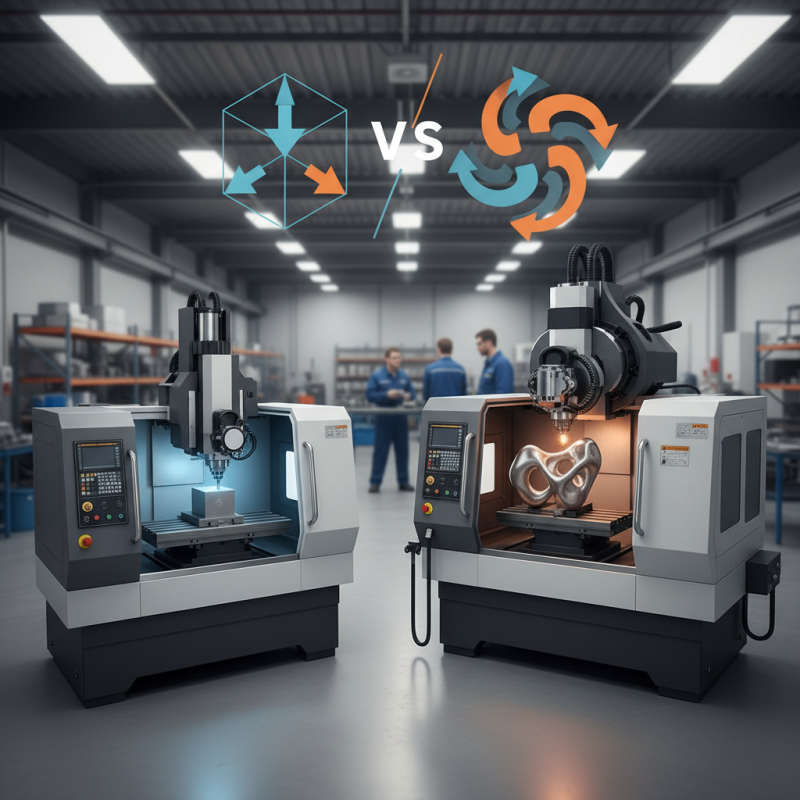
China Top 10 Tips for Choosing Between 3 Axis and 5 Axis CNC?

Understanding CNC Machining: The Basics of 3 Axis vs. 5 Axis

CNC machining is a crucial technology in manufacturing. When choosing between 3 axis and 5 axis CNC machines, understanding their basics is key. A 3 axis CNC machine operates on three linear axes: X, Y, and Z. It is straightforward and often more affordable. This makes it a suitable choice for simpler tasks, such as cutting flat surfaces or drilling holes.

On the other hand, 5 axis CNC machines offer greater flexibility. They can manipulate the tool on five different axes simultaneously, allowing for complex shapes and intricate designs. This capability can enhance productivity and reduce setup time, especially for complicated components. However, operating a 5 axis machine can be more challenging. It requires skilled operators who understand advanced programming and machining techniques.

Choosing the right machine involves careful consideration. Evaluate your specific needs and capabilities. Consider factors like the complexity of your projects and your budget. If your work demands intricate designs, a 5 axis machine might be the better choice. However, if you often produce simpler products, a 3 axis machine might suffice. Balancing cost and functionality is vital. Reflect on the long-term benefits rather than just immediate costs. This decision can shape your production efficiency significantly.

China Top 10 Tips for Choosing Between 3 Axis and 5 Axis CNC

Key Factors to Consider When Choosing Between CNC Axis Types

When choosing between 3-axis and 5-axis CNC machines, several key factors come into play. A 3-axis CNC is generally simpler and more cost-effective. It is ideal for basic machining tasks, especially for parts that require machining on flat surfaces. However, industry reports indicate that around 70% of modern manufacturing applications require more complex geometries. This is where 5-axis CNC machines shine, allowing for intricate designs with greater efficiency.

Another critical factor is the type of materials being processed. For softer materials, a 3-axis machine can suffice. Yet, with harder metals or composite materials, the ability of a 5-axis machine to reduce tooling changes and improve precision can save significant time. According to a study by the International Journal of Advanced Manufacturing Technology, using 5-axis CNC machinery can decrease production time by up to 50% in complex projects.

Ultimately, consider the desired quality and accuracy of the final product. A 5-axis machine offers better surface finish and dimensional accuracy. However, the investment is substantial. A report from the Manufacturing Institute states that while 5-axis machines can boost productivity, they may not always be necessary for simpler tasks, prompting a need for careful evaluation of your specific machining requirements.

Cost Analysis: Budgeting for 3 Axis and 5 Axis CNC Machines

When considering CNC machines, budgeting is crucial. The cost of 3-axis machines is generally lower than that of 5-axis models. You might think 3-axis machines are more affordable, but hidden costs can arise. Training operators and acquiring tools adds to expenses. Analyze long-term costs, not just initial purchase price.

Remember that 5-axis machines offer increased efficiency. They can reduce setup times and improve part accuracy. However, their initial investment is higher, and ongoing maintenance might also be more complex. Consider how often you’ll utilize their capabilities. If the workload is light, a 3-axis machine may suffice.

Investing in technology should not lead to financial strain. Scrutinize your operational needs honestly. Reflect on potential growth and future project demands. You might find yourself wishing for more flexibility, so weigh the benefits of investing more upfront against the possibility of needing upgrades sooner. Balancing your budget with productivity goals is key.

Precision and Complexity: What Each Axis Type Can Achieve

When considering CNC machining, choosing between 3-axis and 5-axis setups hinges on complexity and precision. A 3-axis machine operates on the X, Y, and Z axes. This simplicity is ideal for basic shapes and straightforward designs. Operators can manage it easily, yet this setup limits the intricacy of manufactured components. If your projects demand only flat or mildly contoured surfaces, a 3-axis CNC may suffice.

On the other hand, a 5-axis CNC machine allows for more advanced machining capabilities. It adds two more rotational axes, enhancing the ability to create complex geometries. This means you can produce parts with intricate designs and angled cuts in fewer setups. However, mastering a 5-axis CNC requires more experience. Programming is more complicated, and there's a learning curve. Mistakes can lead to wasted materials, which is a significant concern.

In practice, not all designs necessitate the capabilities of a 5-axis machine. Some projects might benefit from the detail and versatility it offers. Assess your specific needs carefully. Reflect on how often you encounter complex shapes versus simple ones. This decision will impact not only the precision of your work but also the efficiency of your production process. Balancing the trade-off between complexity and your project requirements is essential for optimal machining outcomes.

China Top 10 Tips for Choosing Between 3 Axis and 5 Axis CNC

Axis Type Advantages Disadvantages Ideal Use Cases Cost
3 Axis Simplicity, Lower cost, Easier maintenance Limited to simpler geometries, Less flexibility Flat parts, 2D machining $100,000 - $300,000
5 Axis Higher precision, Complex shapes, Reduced setup time Higher cost, More complex to operate Aerospace, Medical parts, Complex contours $200,000 - $1,000,000
3 Axis Faster production for simple jobs Not suitable for intricate designs Prototyping, Simple components $100,000 - $300,000
5 Axis Ability to machine from multiple angles Require skilled operators Complex aerospace components $200,000 - $1,000,000
3 Axis Cost-effective for startups Limited material options General machining $100,000 - $300,000
5 Axis Improves surface finish Higher maintenance costs High-end production $200,000 - $1,000,000

Applications and Industries: Best Uses for 3 Axis vs. 5 Axis CNC

When considering CNC milling options, understanding the applications for 3-axis and 5-axis machining is crucial. 3-axis CNC machines are commonly used in industries such as woodworking and metal fabrication. These machines excel at straightforward tasks like drilling and contouring. According to a recent industry report, around 60% of small to medium-sized enterprises (SMEs) find 3-axis machines adequate for their production needs.

In contrast, 5-axis CNC machines cater to more complex applications, notably in aerospace and medical device manufacturing. These machines can handle intricate geometry and tight tolerances. Studies indicate that 5-axis machining can reduce setup time by 30% compared to traditional methods. However, the investment can be significant. Not every operation will benefit from the added complexity of a 5-axis system.

Choosing between these two options requires careful consideration. Evaluate your production needs. Understand that while 5-axis machines are powerful, their capabilities may go unused in simpler projects. This analysis can prevent unnecessary expenditure on features that do not enhance productivity or quality. Each decision should be based on specific project requirements and the potential for return on investment.

FAQS

: What is the main difference between 3 axis and 5 axis CNC machines?

: A 3 axis machine operates on three linear axes, while a 5 axis machine manipulates on five axes for complex designs.

When is a 3 axis CNC machine suitable?

It's ideal for simple tasks like cutting flat surfaces or drilling holes, often more affordable.

What advantages do 5 axis CNC machines provide?

They allow for intricate shapes and reduce setup time, enhancing productivity for complicated components.

What skills are needed to operate a 5 axis machine?

Skilled operators with advanced programming and machining techniques are essential for efficient operation.

How do material types affect the choice of CNC machine?

Softer materials may require a 3 axis machine, while harder metals benefit from the precision of a 5 axis machine.

Why is cost balancing important when choosing a CNC machine?

Consider long-term benefits over immediate costs to ensure production efficiency aligns with your needs.

Can a 5 axis machine improve production time?

Yes, it can decrease production time by up to 50% on complex projects but requires careful evaluation of necessity.

What impact does a machine's axis type have on product quality?

A 5 axis machine offers better surface finish and dimensional accuracy compared to a 3 axis machine.

How should one evaluate their specific machining requirements?

Reflect on project complexity, material types, and budget to determine the most fitting CNC machine.

Are there drawbacks to using a 5 axis machine?

The investment is substantial and may not be necessary for simpler tasks, requiring thoughtful consideration.

Conclusion

When considering how to choose between 3 axis and 5 axis CNC machines, it's crucial to understand the fundamental differences in their operation. The basic premise of CNC machining lies in their axis configurations, with 3 axis CNC machines being suitable for simpler tasks and 5 axis CNC machines offering advanced capabilities for more complex designs. Key factors to evaluate include the intricacy of the parts being machined, the precision needed, and specific industry applications.

Cost analysis plays a significant role as well, as 5 axis machines generally require a higher initial investment and operational costs. However, their ability to perform more complicated tasks can lead to time savings and improved efficiency in production. Ultimately, the choice between 3 axis and 5 axis CNC should align with the specific requirements of the projects, including the desired level of precision and the types of materials to be used. Understanding these elements can lead to a well-informed decision tailored to individual machining needs.

Henry

Henry

Henry is a dedicated marketing professional with a profound expertise in the company's offerings. With years of experience in the industry, he possesses an impressive understanding of the market dynamics and consumer behaviors that drive success. Henry is committed to sharing his insights through......