TitanPro Cutting TitanPro Cutting

What Is the Average Lifespan of a CNC Spindle Motor?

Time:2026-10-01 Author:Charlotte
0%

When machine owners ask, “what is the average lifespan of a cnc spindle motor”, they rarely want a single number. They need a planning figure for production, maintenance, and replacement costs. In practice, a spindle may operate for 10,000 to 30,000 hours. Carefully maintained units can exceed that range. Some fail far earlier. The difference often appears through heat, vibration, contamination, and operating habits.

A CNC spindle is not simply an on/off component. Its bearings, windings, cooling system, encoder, and tool interface age differently. A shop cutting aluminum at moderate speeds faces different stresses than one machining hardened steel continuously. Short duty cycles help. So do clean air, correct lubrication, balanced tooling, and proper acceleration settings. Small errors matter.

This guide examines service life through manufacturer guidance, maintenance records, and practical workshop experience. It explains how load, speed, temperature, lubrication, and repair quality influence the final number. Readers should treat every estimate as a range, not a promise. I have seen hours-based predictions fail when coolant entered a bearing. I have also seen old spindles continue running after careful rebuilding. That is why condition monitoring matters more than age alone. Listen for changing noise, track temperature, and record vibration trends before symptoms become costly downtime. The answer is less tidy than expected, but it can still support a defensible maintenance plan.
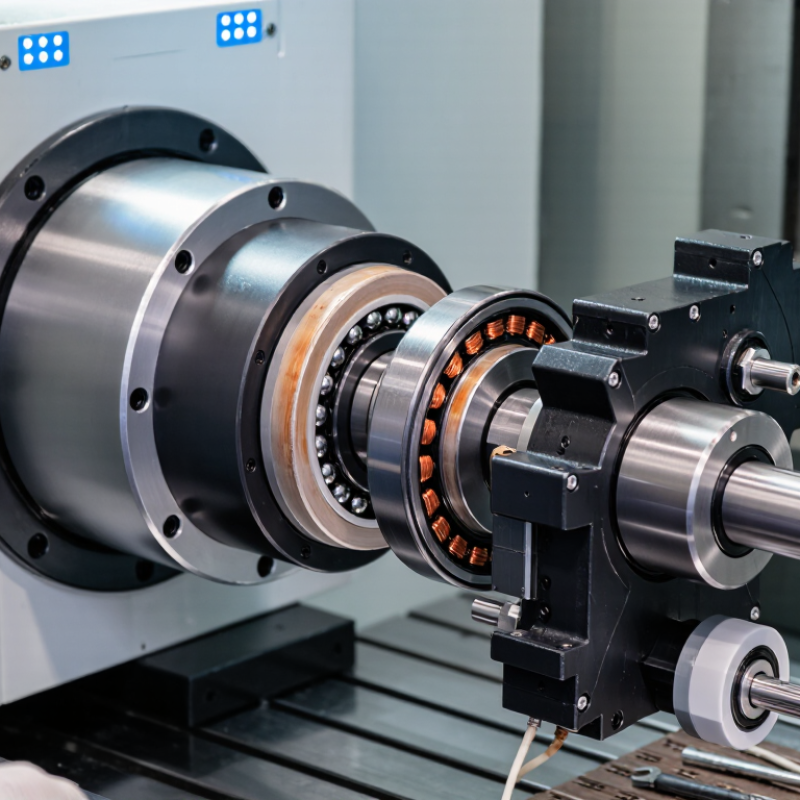
What Is the Average Lifespan of a CNC Spindle Motor?

What Is a CNC Spindle Motor?

What Is the Average Lifespan of a CNC Spindle Motor?

A CNC spindle motor converts electrical power into controlled rotary motion. It drives the cutting tool, usually through a shaft, bearings, cooling system, and encoder. Unlike a standard machine motor, it must deliver high speed, low vibration, and accurate torque. Some models exceed 24,000 revolutions per minute.

The spindle is the machine’s heartbeat.

Its service life depends on heat, load, speed changes, lubrication, and operator habits. ISO 281 uses L10 bearing life, meaning 90% of identical bearings should reach the calculated rating life. This is not a guaranteed failure point. It is a statistical estimate. A spindle may operate for 10,000 to 30,000 hours under controlled conditions, while harsh cutting can shorten that period sharply. These figures are practical industry ranges, not universal promises.

The U.S. Department of Energy reports that motor-driven systems consume about 69% of industrial electricity in the United States. That makes spindle efficiency and cooling important maintenance concerns. Checking vibration, bearing noise, temperature, and runout can reveal problems early. However, inspection records are often incomplete. That weakness deserves attention.

Clean air helps.

A spindle working near its rated speed, with correct tool balance and scheduled bearing checks, usually lasts longer. Yet even careful maintenance cannot remove every risk. Sudden crashes, coolant intrusion, or repeated thermal shocks may damage internal parts within minutes. Lifespan estimates should therefore support planning, not replace condition monitoring.

How Long Does a CNC Spindle Motor Typically Last?

How Long Does a CNC Spindle Motor Typically Last?

A CNC spindle motor typically lasts 10,000 to 20,000 operating hours. This equals roughly five to ten years in a busy workshop. Light-duty machines may run longer. Heavy cutting can shorten that period sharply. The bearing system often decides the outcome, not the motor housing. ISO 281:2007 defines L10 bearing life as the point where 10% of identical bearings may fail from fatigue. It does not promise a fixed service period.

Real operating conditions matter more than catalog figures. A spindle cutting aluminum for several hours daily may remain stable for years. A spindle cutting hardened steel, with poor cooling, faces higher thermal stress. In practice, vibration above 4.5 mm/s RMS deserves investigation, based on commonly used ISO 20816 evaluation ranges. Temperature also matters. A few extra degrees, repeated every shift, can accelerate lubricant breakdown and insulation aging.

I have seen apparently “old” spindles run smoothly, while newer units develop noise after neglected maintenance. That feels unfair, but it is normal engineering reality. IEC 60034-1:2022 links motor performance with rated temperature, load, and operating conditions. Frequent acceleration, contaminated air, and unbalanced tools add hidden damage. Check vibration, bearing noise, current imbalance, and housing temperature every month. Replace grease only when the manufacturer’s maintenance data supports it. Over-lubrication can be harmful. A 15,000-hour estimate is useful, but it is still only an estimate.

What Factors Affect CNC Spindle Motor Lifespan?

A CNC spindle motor often lasts 10,000 to 30,000 operating hours. The estimate is imperfect. Its service life changes sharply with workload and maintenance. A light-duty spindle may run for many years. A heavily loaded unit may fail much sooner.

Heat is usually the strongest influence. Continuous cutting at high speed raises bearing temperature and shortens lubricant life. Poorly balanced tools create vibration, while excessive tool runout stresses the shaft. Cutting force matters too. Deep passes in hard material demand more torque and generate damaging heat. Coolant contamination can enter seals and harm sensitive components. Even small leaks deserve attention.

Maintenance records provide better evidence than a calendar estimate. Technicians should check vibration, noise, temperature, and current draw regularly. A spindle reaching 70°C instead of its normal 45°C needs investigation. Clean air filters, correct lubrication, accurate tool holders, and proper warm-up cycles can extend service life. Avoid abrupt starts after long storage. Watch the trend.

Operating habits also matter. Running near maximum speed for every job leaves little thermal margin. Intermittent production may reduce wear, but frequent start-stop cycles can stress electrical parts. I would not trust one lifespan number. Actual life depends on machine structure, cutting data, environment, and operator discipline. A neglected spindle can fail early, despite modest operating hours. A carefully monitored one may exceed the expected range.

How Can You Extend CNC Spindle Motor Service Life?

A CNC spindle motor may operate for 10,000 to 30,000 hours, depending on load, speed, cooling, and maintenance. Heavy cutting, frequent acceleration, and poor alignment can shorten that range. A clean workshop helps, but cleanliness alone cannot protect worn bearings. Service records provide better evidence than a fixed lifespan estimate.

Run the spindle at low speed during daily warm-up. This allows lubricant to distribute before demanding operations begin. Follow the machine maker’s recommended warm-up sequence and speed limits. Avoid sudden speed changes when the spindle is cold. Use balanced tool holders and inspect them for damage. Even small imbalance can create vibration, heat, and bearing stress. Check tool runout with suitable measuring equipment. Excessive runout often signals contamination, wear, or incorrect clamping.

Keep cooling air paths, fans, and filters clear. For liquid-cooled systems, monitor flow, temperature, and fluid condition. Replace contaminated coolant before it reaches the motor housing. Listen for unusual noise and compare vibration readings over time. A single reading may mislead you. Trends are more useful. Schedule qualified inspections before vibration becomes severe. Technicians should check bearings, insulation, encoder signals, and shaft condition. Do not ignore minor alarms. I have seen small warnings become expensive failures when production pressure delayed inspection. Maintenance plans also need revision, because real cutting conditions rarely match the original assumptions.

When Should a CNC Spindle Motor Be Repaired or Replaced?

A CNC spindle motor has no fixed expiration date. In real workshops, service life often reaches 10,000–30,000 operating hours, but load, speed, coolant, balance, and maintenance change that number sharply. A spindle running near maximum speed every day ages faster than one used intermittently. The U.S. Department of Energy’s Operations & Maintenance Best Practices Guide reports that predictive maintenance may reduce maintenance costs by 25–30% compared with reactive maintenance. That makes condition data more useful than age alone.

Repair is usually sensible when the fault is localized. Examples include worn bearings, damaged seals, a faulty sensor, or degraded lubrication. Watch for rising vibration, unusual grinding, higher bearing temperature, taper runout, and unstable cutting finishes. ISO 20816-1:2016 supports evaluating machine vibration through measured operating conditions rather than calendar age. A repair becomes less attractive when the shaft, rotor, housing, or tool interface is badly damaged. Repeated failures also matter. A practical workshop rule compares the repair quote with replacement cost, often using a 50–60% threshold. It is only a guide, not a law.

Tips: Record vibration, temperature, spindle load, and run time after each inspection. Keep before-and-after measurements. If vibration rises gradually, schedule repair before production quality collapses. If failure occurs suddenly, check coolant ingress and electrical supply first. Do not replace a spindle merely because it is old. That decision can waste money. Conversely, delaying a clearly damaged spindle can ruin tooling, scrap parts, and extend downtime. The DOE guide also identifies predictive maintenance as a way to reduce unexpected equipment failures, although real results depend heavily on measurement quality and technician experience.

FAQS

What does a CNC spindle motor do?

It converts electrical power into controlled rotary motion. The shaft drives a cutting tool at high speed. Some spindles exceed 24,000 revolutions per minute.

How long does a CNC spindle motor usually last?

A typical spindle lasts 10,000 to 20,000 operating hours. This may equal five to ten years in a busy workshop. Light-duty use can extend its life.

What determines spindle motor lifespan?

Heat, cutting load, speed changes, lubrication, cooling, and operator habits all matter. Tool balance and clean air also reduce stress. Catalog estimates are not promises.

Can heavy cutting shorten spindle life?

Yes. Hardened steel creates greater thermal and mechanical stress. Poor cooling can worsen the damage. Repeated overloads may reduce service life sharply.

Which spindle parts usually fail first?

Bearings often decide the outcome. They may develop noise, vibration, or excess heat before the motor housing fails. A quiet housing proves very little.

What warning signs should technicians check?

Check rising temperature, unusual bearing noise, vibration, current imbalance, and tool runout. Vibration above 4.5 mm/s RMS deserves investigation. Small changes matter.

How often should a spindle be inspected?

Monthly checks provide a practical starting point. Record temperature, vibration, noise, and runout after similar workloads. Incomplete records create avoidable uncertainty.

Can lubrication problems damage a spindle?

Yes. Too little lubrication increases friction and heat. Too much grease can also cause trouble. Use maintenance data carefully, not guesswork.

Can careful maintenance prevent every spindle failure?

No. A crash, coolant intrusion, or sudden thermal shock can damage internal parts within minutes. Maintenance reduces risk, but it cannot remove risk.

Is a 15,000-hour lifespan guaranteed?

No. It is a planning estimate. Actual life depends on operating conditions and hidden damage. I would trust condition monitoring more than a single number.

Conclusion

A CNC spindle motor is the high-speed drive component that rotates cutting tools or workpieces during machining. If you are asking, “what is the average lifespan of a cnc spindle motor,” the general answer is often several years, commonly ranging from 5,000 to 20,000 operating hours, depending on usage and maintenance. Light-duty applications may achieve a longer service life, while demanding production environments can shorten it.

Spindle lifespan is influenced by operating speed, cutting loads, heat, vibration, contamination, lubrication, alignment, and the quality of electrical power. Regular cleaning, proper cooling, balanced tooling, correct lubrication, scheduled inspections, and avoiding overloads can help extend service life. Warning signs such as unusual noise, excessive vibration, overheating, reduced accuracy, or unstable speed may indicate that repair is needed. If damage is extensive, repairs are no longer economical, or performance remains unreliable, replacing the spindle motor may be the most practical solution.

Charlotte

Charlotte

Charlotte is a seasoned marketing professional with a deep understanding of the company's portfolio and a passion for elevating its presence in the market. With a keen eye for detail and a commitment to excellence, she ensures that our professional blog is regularly updated with insightful articles......